

Demolition in occupied buildings is one of the most sensitive phases of any renovation or tenant improvement project. Unlike vacant spaces, active buildings require demolition to proceed while people continue working, living, or operating nearby businesses. Employees may be on site, customers may be visiting, and residents may still rely on the building for daily life.
This reality introduces an entirely different level of responsibility and risk. Every decision affects people, systems, and operations beyond the work area. Noise, dust, vibration, and access limitations must all be carefully managed to prevent disruption and safety concerns. Planning must account not only for what is being removed, but also for what must remain protected and operational throughout the process.
For property managers, demolition is not simply about clearing space for what comes next. It’s about safeguarding tenants, maintaining uninterrupted building operations, and reducing liability exposure. Local Demo approaches demolition with this responsibility in mind, focusing on controlled execution, careful planning, and risk awareness from day one.
What Demolition in Occupied Buildings Really Means
Interior demolition may include offices that continue daily operations, medical facilities with patients and staff present, retail spaces open to the public, multi-tenant residential buildings, or mixed-use properties with overlapping uses.
These environments typically share critical building systems such as HVAC, plumbing, electrical, fire protection, and data infrastructure. Walls, ceilings, and floors often contain pathways that serve multiple tenants or areas beyond the demolition zone.
Unlike vacant demolition projects, mistakes in occupied buildings can have immediate consequences. A single misstep can disrupt utilities, compromise indoor air quality, or create safety hazards for occupants. At Local Demo, we treat demolition in an occupied building as a highly coordinated process rather than a simple removal task.
Proper containment is established to prevent dust migration, airflow is managed to protect indoor air quality, and communication remains consistent with property managers, tenants, and other trades.
Primary Risks Property Managers Must Manage
Demolition in occupied buildings introduces risks that go beyond material removal. One of the most significant concerns is dust migration. Fine particles generated from drywall, concrete, insulation, and other building materials can readily travel through air pathways, wall cavities, and HVAC systems if not adequately controlled.
Once airborne, these particles affect indoor air quality and can quickly spread beyond the demolition zone, leading to tenant complaints, health concerns, or regulatory issues.
Noise and vibration present additional challenges in occupied environments. Unmanaged demolition noise disrupts office productivity, medical operations, and customer-facing businesses. Persistent vibration can impact sensitive equipment, finished surfaces, or adjacent tenant spaces, creating further disruption and potential damage claims.
There’s also a heightened risk of accidental utility interruptions. Cutting into walls, ceilings, or floors without proper verification can affect electrical circuits, plumbing lines, fire protection systems, or data connections that serve occupied areas. Even a brief interruption can impact business operations and tenant confidence.
From a property management perspective, these risks translate directly into liability exposure, tenant dissatisfaction, and reputational impact. At Local Demo, we address these concerns through careful planning, system verification, and a controlled demolition approach designed specifically for active buildings.
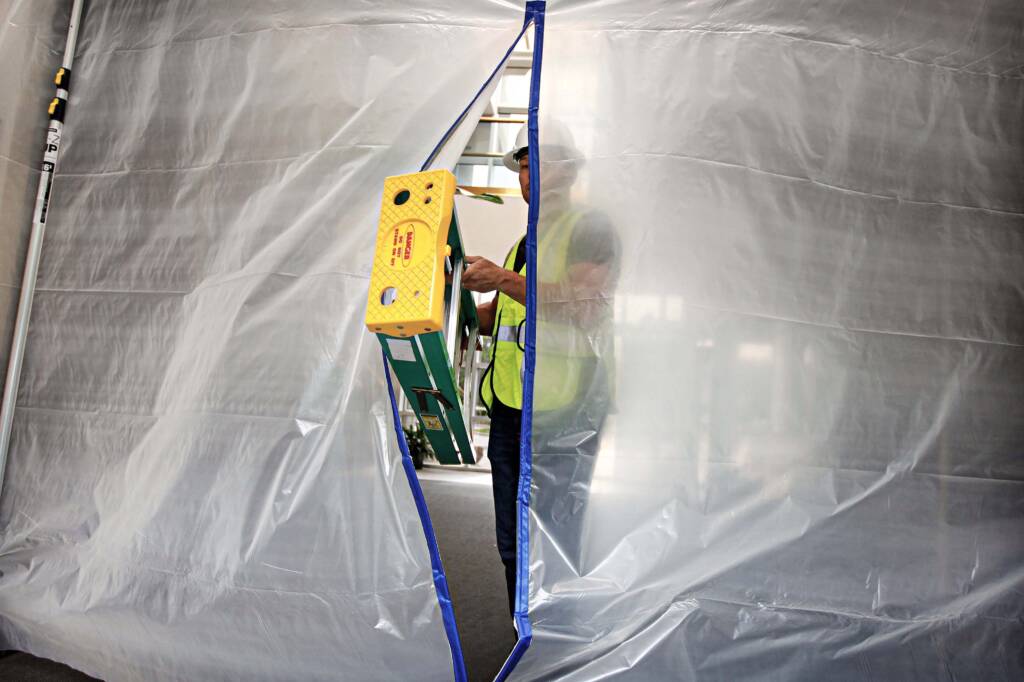
Containment Is Non-Negotiable During Demolition in Occupied Spaces
Professional demolition in occupied buildings starts with containment. This is not optional, and it cannot be improvised. Containment is the foundation that protects tenants, building systems, and daily operations throughout the demolition process. Physical containment systems are used to isolate the demolition zone from populated areas fully.
These may include zipper wall systems, framed temporary walls, and sealed barriers that prevent dust and debris from escaping into active spaces. Openings, penetrations, and transitions are sealed to eliminate pathways for airborne particles.
Negative air pressure is applied inside the work area to control airflow direction. This ensures that airborne particles are pulled inward rather than pushed into surrounding spaces. HEPA-filtered air scrubbers capture fine particulates before the air is exhausted, protecting both occupants and building systems.
Proper containment systems are critical in occupied environments and must be viewed as an integrated approach rather than a single step. HEPA-filtered air scrubbers, zipper wall systems, and sealed barriers work together to prevent dust and debris from escaping, ensuring demolition remains controlled from start to finish and protecting indoor air quality.
Protecting Tenants, Staff, and Daily Operations
Successful demolition in occupied buildings is built around minimizing disruption while maintaining safety and professionalism. This begins with clearly defined boundaries between work zones and populated areas. Access points are controlled, egress paths (safety exits) are protected, and clear signage is installed to guide occupants safely around active work areas.
Work schedules are carefully coordinated with property managers to minimize disruption during peak occupancy hours. Demolition may be phased or scheduled during off-hours to reduce noise, vibration, and operational impact, helping maintain regular building activity while renovation progresses smoothly.
Clear and consistent communication with property managers is essential for minimizing disruption. When tenants and staff understand the scope of work, timing, and expectations, concerns are reduced, and cooperation improves. Local Demo prioritizes proactive communication to share updates quickly and make adjustments as needed, ensuring smooth project execution.
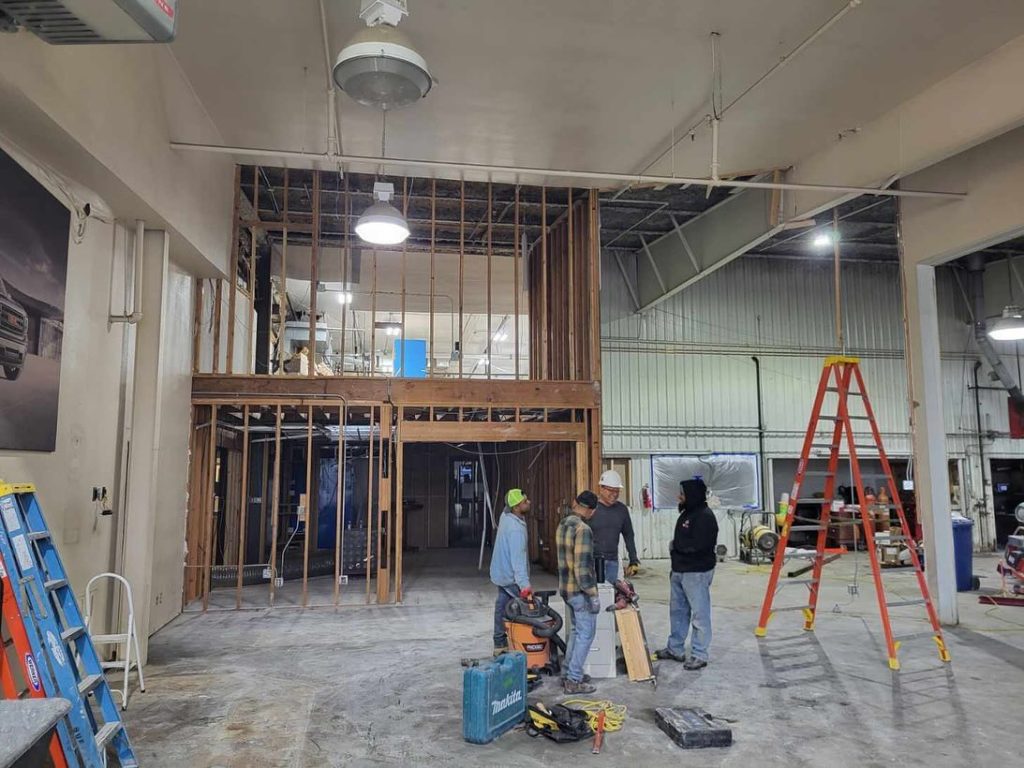
Coordinating With Building Systems and Other Trades
Occupied buildings rely on interconnected systems that cannot be compromised during demolition. Before work begins, active utilities are identified and protected. HVAC systems are isolated to prevent dust infiltration. Electrical and plumbing pathways are verified to avoid accidental shutdowns.
Demolition must also be coordinated with electricians, plumbers, HVAC contractors, and other trades involved in the renovation. Proper sequencing prevents rework, protects new installations, and keeps projects moving forward efficiently. This level of coordination requires experience and planning that extends beyond basic demolition skills.
Demolition in Occupied Buildings: Safety and Compliance
Safety planning is central to demolition in occupied buildings. Each project should begin with a site-specific safety plan that accounts for active occupants, shared spaces, and building operations. Job hazard analysis helps identify potential risks before work begins.
Daily cleanup and debris management prevent dust accumulation and maintain a professional environment. Documentation of safety measures, containment strategies, and progress updates provides transparency for property managers and ownership groups. This documentation also supports compliance and reduces liability exposure.
How Local Demo Handles Demolition in Occupied Buildings
Local Demo approaches demolition in occupied buildings with a clean, controlled mindset. Every project begins with a detailed walkthrough and planning phase. Containment strategies, schedules, and scopes of work are clearly defined before demolition starts.
Our team prioritizes dust control, safety, and respect for active spaces. We coordinate closely with property managers, tenants, and other trades to ensure demolition supports the broader renovation goals rather than disrupting them. The result is a smoother project, fewer surprises, and confidence that the building remains protected throughout the process.
Frequently Asked Questions About Demolition in Occupied Buildings
- Can demolition happen while tenants are present?
Yes, when proper containment, airflow control, and scheduling are in place. Professional demolition is designed to isolate work zones and protect occupied areas. - How do you prevent dust from spreading through the building?
By using physical containment, negative air pressure, and HEPA filtration to control airflow and capture particles at the source. - Will demolition affect HVAC systems?
Not when systems are properly isolated and protected. Preventing contamination of HVAC equipment is a key part of professional planning. - How long does it take to demolish an occupied building?
Timelines vary based on scope and building conditions. Occupied projects are often phased to minimize disruption. - Do occupied demolition projects require permits?
Permit requirements depend on the scope of work and local regulations. Professional contractors help ensure compliance from the start. - How is noise managed during demolition in active buildings?
Noise is controlled through phased work, selective demolition methods, and scheduling that avoids peak occupancy hours whenever possible. - What happens if unexpected issues are discovered during demolition?
Work pauses as needed to assess conditions, communicate findings, and determine the safest path forward before proceeding. - Can demolition be scheduled outside of regular business hours?
Yes, off-hour or weekend demolition is often recommended in occupied buildings to reduce disruption to tenants and operations. - Who is responsible for communicating with tenants during the project?
Property managers typically lead tenant communication, supported by clear schedules and updates provided by the demolition contractor. - What makes active building demolition different from standard interior demolition?
Occupied demolition requires additional planning, containment, airflow control, and coordination to protect people, systems, and ongoing operations.
Local Demo: Demolition That Supports, Not Disrupts, Your Property
Demolition in occupied buildings requires more than removal. It involves planning, protection, and experience. When handled correctly, demolition becomes a controlled first step that sets the tone for the entire renovation. For property managers, choosing the right demolition partner protects tenants, operations, and long-term asset value.
Planning demolition in an occupied building?
Local Demo specializes in controlled interior demolition, prioritizing safety, cleanliness, and operational continuity. Contact our team today to discuss your project and a demolition plan that works for your property and your people.
Get In Touch
Our Location
125 Central Avenue, Unit J Bozeman, MT 59718
Call Us
Phone: (406) 595-0227
E-mail Us
jscauzzo@jobsitesolutionsmt.com
Our Service Area
We Service the Following Counties